

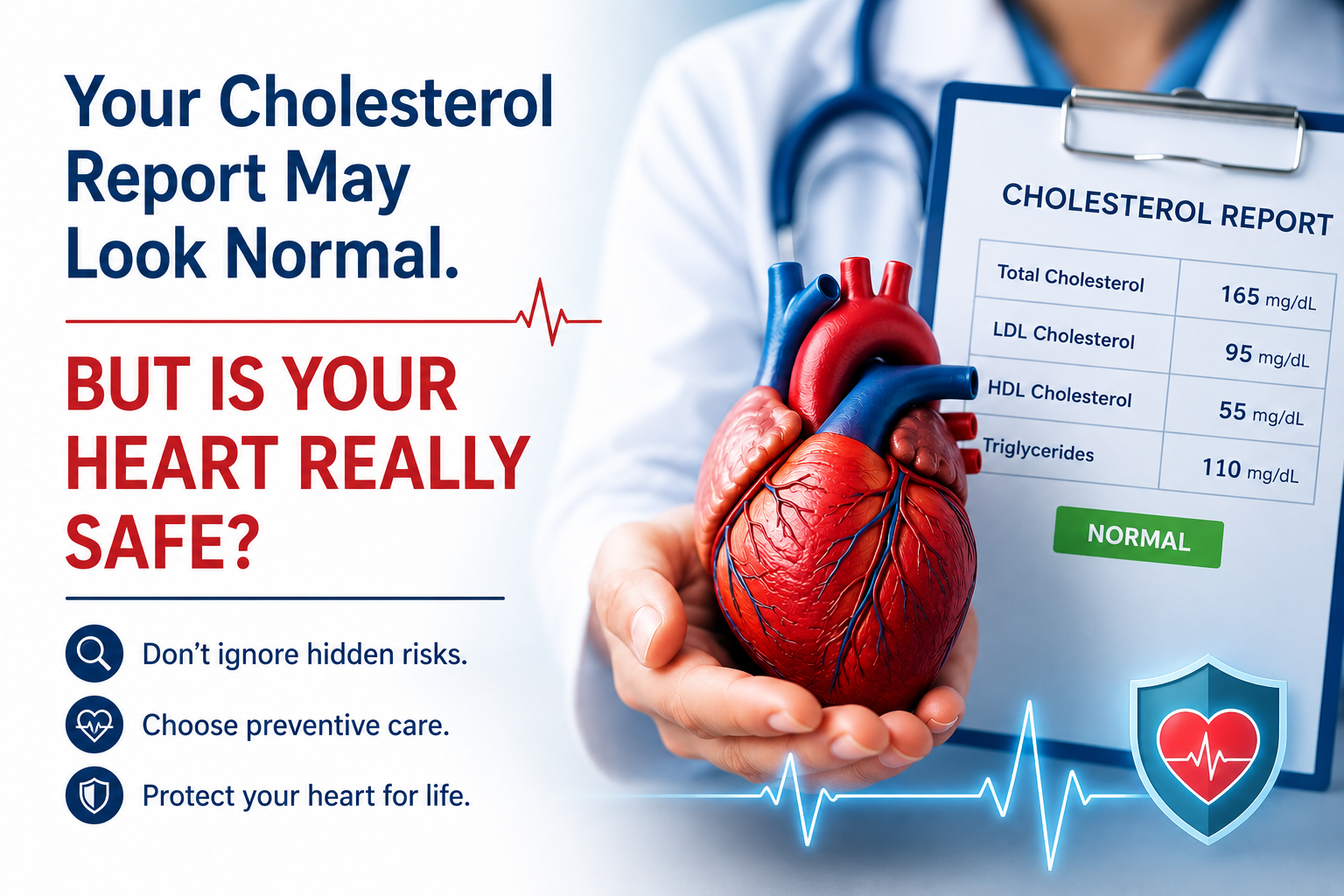
When most people receive a cholesterol report showing values within the normal range, they feel reassured. A normal cholesterol test is often interpreted as a clean bill of heart health. However, cardiologists are increasingly emphasizing that a normal cholesterol report does not always mean your heart is free from risk. Many individuals who suffer heart attacks or develop cardiovascular disease have cholesterol levels that appear normal on routine testing.
Understanding what your cholesterol report really means—and what it might miss—can help you take a more comprehensive approach to protecting your heart.
Why Cholesterol Matters
Cholesterol is a fatty substance present in your blood that is essential for several bodily functions. However, excessive levels of certain types of cholesterol can lead to plaque buildup inside the arteries, increasing the risk of heart attack and stroke.
A standard lipid profile usually includes:
- Total Cholesterol
- LDL (Low-Density Lipoprotein) – often called “bad cholesterol”
- HDL (High-Density Lipoprotein) – known as “good cholesterol”
- Triglycerides
These numbers provide valuable information, but they do not always reveal the complete picture of cardiovascular health.
The Hidden Risk Behind Normal Cholesterol Levels
Many people assume that if their LDL cholesterol is below the laboratory reference range, they are safe from heart disease. Unfortunately, cardiovascular risk depends on much more than cholesterol alone. Factors such as inflammation, genetics, blood pressure, diabetes, obesity, smoking, and family history can significantly affect heart health.
Recent reports indicate that a substantial number of heart attack patients had LDL levels that appeared normal before their cardiac event. This highlights a critical gap between routine cholesterol testing and actual cardiovascular risk assessment.
Understanding Atherogenic Dyslipidemia
A common pattern seen among Indians is known as atherogenic dyslipidemia. This condition may involve:
- Low HDL cholesterol
- High triglycerides
- Normal or mildly elevated LDL cholesterol
Even when LDL levels look acceptable, this combination can significantly increase the risk of developing heart disease. Many patients with this pattern remain unaware of their risk because their routine cholesterol report appears normal.
What Your Lipid Profile May Not Tell You
Traditional cholesterol tests are important, but advanced cardiovascular risk assessment often requires additional investigations.
Lipoprotein(a) – The Silent Risk Factor
One of the most overlooked heart risk markers is Lipoprotein(a), commonly known as Lp(a). This genetically inherited particle is not included in routine lipid profiles but has been linked to an increased risk of heart attack and stroke, even in individuals with normal cholesterol levels.
Doctors now recommend that many adults undergo at least one Lp(a) test during their lifetime, especially those with:
- Family history of heart disease
- Premature heart attacks in relatives
- Unexplained cardiovascular risk
Since Lp(a) is largely genetic, lifestyle changes alone may not significantly reduce its levels, making early identification extremely important.
Inflammatory Markers
Inflammation plays a major role in the development of arterial plaque. Certain blood tests, such as high-sensitivity C-reactive protein (hs-CRP), can help identify inflammation that may contribute to cardiovascular disease. These markers are often overlooked in routine screenings.
Other Factors That Influence Heart Health
Even with normal cholesterol levels, you may still be at increased risk if you have:
High Blood Pressure
Hypertension damages blood vessels over time and accelerates plaque formation. Many individuals remain unaware of elevated blood pressure because it often causes no symptoms.
Diabetes
Diabetes significantly increases the risk of cardiovascular disease by damaging blood vessels and promoting inflammation. Elevated blood sugar levels can be harmful even when cholesterol appears normal.
Family History
Genetics can influence how your body processes cholesterol and responds to cardiovascular risk factors. A family history of early heart disease should never be ignored.
Smoking and Lifestyle
Smoking, physical inactivity, poor diet, obesity, and chronic stress all contribute to cardiovascular disease, regardless of cholesterol levels. Lifestyle modification remains one of the most effective ways to reduce risk.
Why Preventive Cardiology Is Important
Modern cardiology increasingly focuses on prevention rather than waiting for symptoms to develop. Preventive cardiology aims to identify risk factors early and create personalized strategies to prevent heart attacks, strokes, and other cardiovascular complications.
A comprehensive preventive heart evaluation may include:
- Detailed medical history
- Blood pressure assessment
- Lipid profile analysis
- Diabetes screening
- Advanced cholesterol testing
- Cardiac imaging when indicated
- Lifestyle risk assessment
This proactive approach allows doctors to detect hidden risks before they become serious health problems.
Warning Signs You Should Not Ignore
Even if your cholesterol report looks normal, consult a cardiologist if you experience:
- Chest discomfort or pressure
- Shortness of breath
- Unexplained fatigue
- Palpitations
- Dizziness
- Reduced exercise tolerance
- Strong family history of heart disease
Early evaluation can often prevent major cardiac events.
Protecting Your Heart Beyond Cholesterol Numbers
Heart health is about much more than a single laboratory report. While cholesterol remains an important marker, it is only one piece of a much larger puzzle. A normal cholesterol report should not lead to complacency, especially if other cardiovascular risk factors are present.
Maintaining a healthy lifestyle, undergoing regular cardiac screenings, controlling blood pressure and diabetes, and discussing advanced risk assessment tests with your cardiologist can provide a more accurate understanding of your heart health.
If you are looking for the Best Cardiology Treatment in Shalimar Bagh Delhi, timely consultation with an experienced cardiologist can help identify hidden cardiovascular risks and develop a personalized prevention and treatment plan. Early detection remains the most effective strategy for protecting your heart and ensuring a healthier future.
A normal cholesterol report is encouraging, but it should not be considered the final verdict on your heart health. Hidden risk factors, genetic predispositions, inflammation, and lifestyle-related issues can still increase your chances of developing cardiovascular disease. The key is comprehensive evaluation, preventive care, and regular monitoring.
Remember, the goal is not just normal cholesterol numbers—it is a healthy heart for life.
Consult with Dr. Nityanand Tripathi, a leading cardiologist at Fortis Hospital, Shalimar Bagh, Delhi. With over 21 years of extensive experience in clinical cardiology, interventional cardiology, and electrophysiology, he is dedicated to providing advanced heart care and personalized treatment for a wide range of cardiac conditions.