
AICD Implantation Specialist in Delhi – A Complete Guide to Life-Saving Heart Rhythm Therapy
Heart rhythm disorders can be silent yet dangerous. When the heart suddenly beats too fast or irregularly, it can lead to life-threatening situations like sudden cardiac arrest. This is where an Automatic Implantable Cardioverter Defibrillator (AICD) plays a crucial role. If you are searching for an AICD implantation specialist in Delhi, this guide will help you understand everything in a clear and professional manner.
What is an AICD (Implantable Cardioverter Defibrillator)?
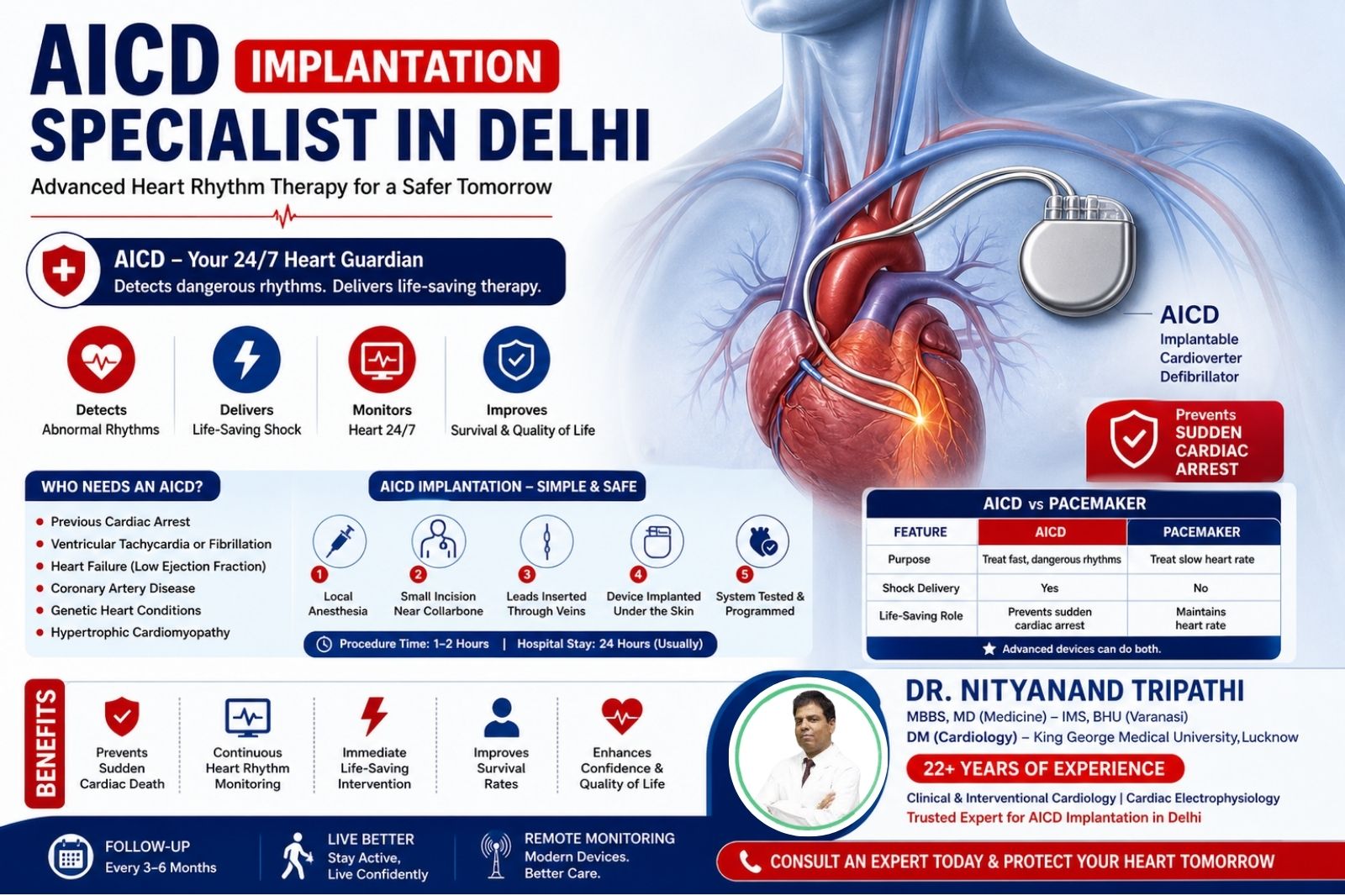
An AICD is a small, advanced medical device implanted in the chest to monitor heart rhythms continuously. It detects dangerous arrhythmias such as ventricular tachycardia and ventricular fibrillation and immediately delivers electrical therapy to restore normal rhythm.
Think of it as a 24/7 heart guardian that acts instantly when your heart is at risk.
How Does an AICD Work?
The device consists of three key components:
- Pulse Generator – Contains the battery and electronic system
- Leads (Wires) – Carry electrical signals between heart and device
- Programmer – Used by doctors to monitor and adjust settings
Working Mechanism:
- Detects abnormal heart rhythms in real time
- Delivers Anti-Tachycardia Pacing (ATP) for mild arrhythmias
- Provides cardioversion or defibrillation shocks for severe conditions
- Records heart activity for medical analysis
Why Do You Need an AICD?
Doctors recommend AICD implantation for patients at high risk of sudden cardiac arrest or serious arrhythmias.
Common Indications:
- Previous cardiac arrest
- Ventricular tachycardia or fibrillation
- Heart failure with low ejection fraction
- Coronary artery disease
- Genetic heart conditions (e.g., Long QT Syndrome)
- Hypertrophic cardiomyopathy
If you fall under these categories, consulting an AICD implantation specialist in Delhi is essential for timely intervention.
AICD Implantation Procedure – Step-by-Step
The procedure is minimally invasive and typically completed within 1–2 hours.
What Happens During the Procedure:
- Local anesthesia is administered
- A small incision is made near the collarbone
- Leads are inserted through veins into the heart
- The device is implanted under the skin
- The system is tested and programmed
Recovery:
- Hospital stay: 24 hours (usually)
- Mild discomfort for a few days
- Resume daily activities within 1–2 weeks
Benefits of AICD Implantation
Choosing the right AICD implantation specialist in Delhi ensures optimal outcomes. The benefits include:
✔ Prevents sudden cardiac death
✔ Continuous heart rhythm monitoring
✔ Immediate life-saving intervention
✔ Improves survival rates in high-risk patients
✔ Enhances confidence and quality of life
Risks and Possible Complications
While AICD implantation is generally safe, some risks may include:
- Infection at implant site
- Bleeding or swelling
- Lead displacement
- Pneumothorax (collapsed lung)
- Rare device malfunction
- Occasional inappropriate shocks
Regular follow-ups significantly reduce these risks.
Life After AICD Implantation
Living with an AICD is manageable and safe with proper guidance.
What You Can Do:
- Walk and perform daily activities
- Travel with precautions
- Engage in light exercise
What to Avoid:
- Strong magnetic fields
- Heavy lifting (initial weeks)
- Contact sports
Follow-Up Care:
- Device check every 3–6 months
- Remote monitoring available in modern devices
AICD vs Pacemaker – Key Difference
| Feature | AICD | Pacemaker |
| Purpose | Treat fast, dangerous rhythms | Treat slow heart rate |
| Shock Delivery | Yes | No |
| Life-Saving Role | Prevents sudden cardiac arrest | Maintains heart rate |
Some advanced devices combine both functions.
Advancements in AICD Technology
Modern AICDs are more advanced than ever:
- Smaller and lightweight
- Battery life up to 7–10 years
- Wireless remote monitoring
- Smart detection algorithms to reduce unnecessary shocks
Choosing the Right AICD Implantation Specialist in Delhi
Selecting an experienced cardiologist is critical for safety and long-term success.
Look for:
- Expertise in cardiac electrophysiology
- Experience in complex device implantation
- Access to advanced hospital facilities
- Strong patient outcomes and follow-up care
About Dr. Nityanand Tripathi
Dr. Nityanand Tripathi is a highly experienced cardiologist with over 22 years of expertise in clinical and interventional cardiology and electrophysiology.
He completed:
- MBBS and MD (Medicine) from the Institute of Medical Sciences, Banaras Hindu University (Varanasi)
- DM (Cardiology) from King George Medical University, Lucknow
His extensive experience in managing complex heart rhythm disorders and performing advanced cardiac procedures makes him a trusted name for patients seeking an AICD implantation specialist in Delhi.
Conclusion
An AICD is not just a medical device—it is a life-saving technology that offers continuous protection against dangerous heart rhythms. For individuals at high risk of sudden cardiac arrest, timely implantation can be the difference between life and death.
If you or your loved one is experiencing symptoms or has been diagnosed with a serious heart condition, consulting an experienced AICD implantation specialist in Delhi is the most important step toward a safer and healthier future.
Frequently Asked Questions (FAQs)
Is AICD implantation painful?
The procedure is done under local anesthesia. Mild discomfort may occur after surgery but is manageable.
How long does the device last?
Typically between 5 to 10 years, depending on usage.
Can I travel with an AICD?
Yes, but always carry your device ID card and inform airport security.
Will I feel the shock?
Yes, it may feel like a sudden thump in the chest, but it is life-saving.
Can AICD be replaced?
Yes, the battery or device can be replaced through a minor procedure when needed.