
A healthy heart depends on a regular electrical rhythm to pump blood efficiently throughout the body. When the heart’s natural electrical system becomes damaged or fails to maintain an adequate heart rate, patients may experience dizziness, fatigue, fainting, breathlessness, or reduced exercise tolerance. In selected cases, pacemaker implantation can help regulate the heartbeat and improve symptoms.
Choosing an experienced Pacemaker Implantation Surgeon in India is an important decision because successful treatment involves much more than placing a device. Proper diagnosis, selection of the appropriate pacemaker, precise implantation, programming, and long-term follow-up all play an important role.
Patients looking for advanced cardiac and electrophysiology care may consider consulting Dr. Nityanand Tripathi, Principal Director & HOD of Cardiology & Electrophysiology at Fortis Hospital, Shalimar Bagh, New Delhi. His official profile lists more than 31 years of clinical experience and expertise in interventional cardiology, electrophysiology, pacemaker implantation, ICD therapy, CRT and leadless pacemakers.
What Is a Pacemaker?
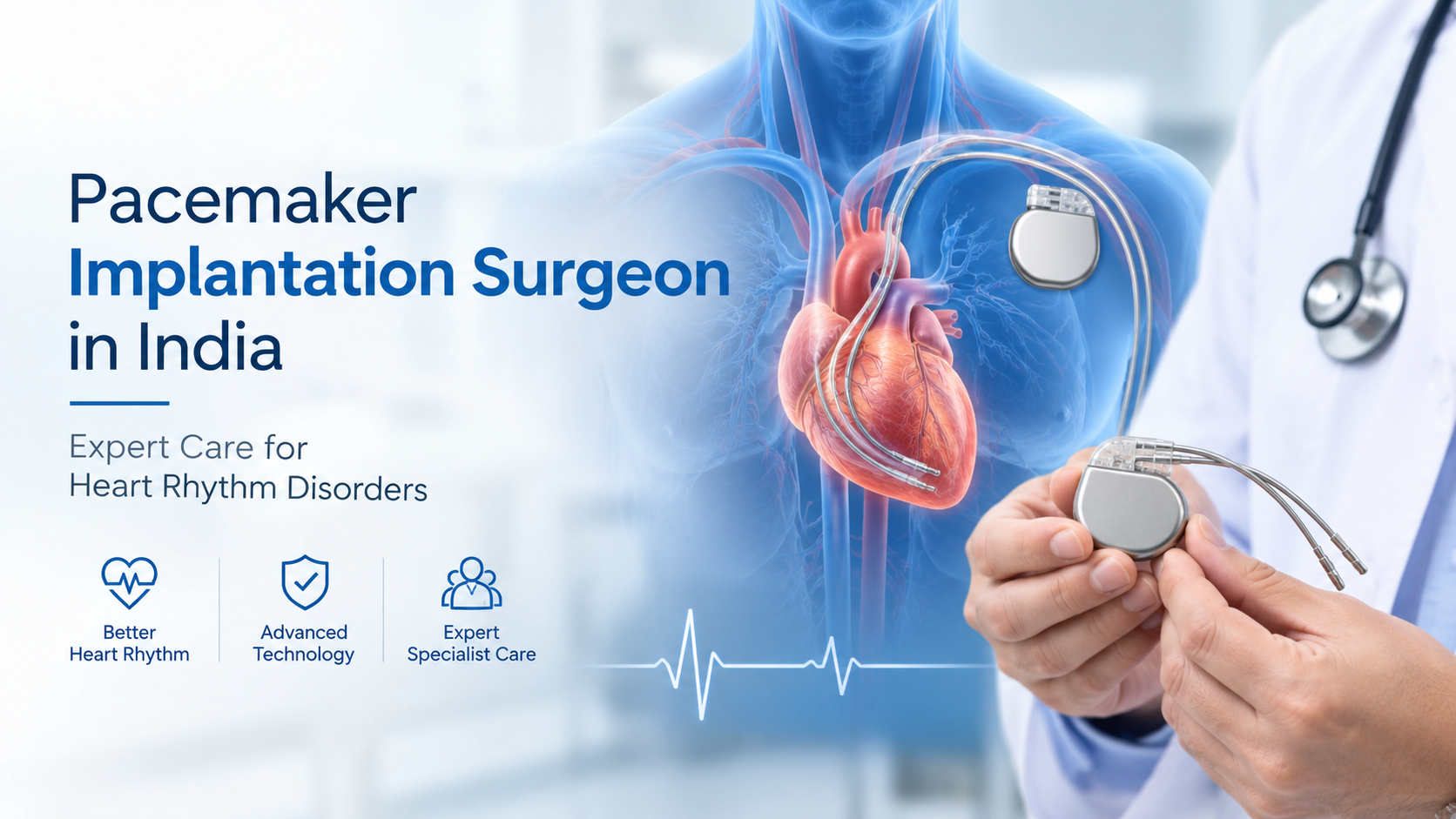
A pacemaker is a small electronic medical device designed to help regulate certain slow or irregular heart rhythms. It monitors the heart’s electrical activity and can provide electrical impulses when the heart rate becomes too slow or the electrical conduction system does not function properly.
Depending on the patient’s condition, doctors may consider conventional pacemakers or newer options such as leadless pacemakers. The choice depends on factors including the type of rhythm disorder, overall health, anatomy, medical history and clinical requirements.
A pacemaker does not cure every underlying heart condition. Instead, it provides electrical support when the heart’s natural rhythm or conduction system requires assistance.
When Is Pacemaker Implantation Recommended?
Pacemaker implantation may be recommended for selected patients with conditions affecting the heart’s electrical system. Common situations may include:
- Bradycardia or an abnormally slow heart rate
- Certain types of heart block
- Recurrent fainting associated with a rhythm disorder
- Certain conduction abnormalities
- Some patients with heart failure who meet criteria for device therapy
- Other clinically significant electrical conduction disorders
Not everyone with a slow heart rate requires a pacemaker. A cardiologist or cardiac electrophysiologist generally evaluates symptoms, ECG findings, medical history and other diagnostic information before recommending implantation.
Why Choose an Experienced Pacemaker Implantation Surgeon in India?
Pacemaker implantation requires careful clinical decision-making before, during and after the procedure. An experienced specialist can assess the underlying rhythm problem and determine whether pacemaker therapy is appropriate.
Important aspects of specialist pacemaker care include:
Accurate Diagnosis
Identifying the exact cause of an abnormal heart rhythm is the first step. ECG, Holter monitoring, echocardiography and other investigations may be recommended depending on the patient’s symptoms and clinical history.
Appropriate Device Selection
Different patients may require different types of cardiac devices. Conventional pacemakers, leadless pacemakers and other advanced device therapies may be considered depending on individual requirements.
Precise Implantation
Proper placement of the device and leads, where applicable, is essential for effective pacing and long-term device performance.
Device Programming and Follow-Up
After implantation, regular follow-up helps doctors assess device function, battery status and the patient’s response to treatment. Programming may also be adjusted when clinically required.
Pacemaker Implantation: What Should Patients Expect?
Pacemaker implantation is generally considered a minimally invasive cardiac procedure, but the exact approach depends on the type of device and the patient’s medical condition.
Before the procedure, the doctor reviews the patient’s medical history, medications, investigations and rhythm diagnosis. The procedure is then performed using an appropriate technique and device based on the patient’s needs.
Following implantation, patients are monitored for recovery and receive instructions regarding wound care, physical activity, medications and follow-up appointments.
The recovery period varies from patient to patient. It is important to follow the treating specialist’s instructions rather than comparing recovery with another patient’s experience.
Advanced Pacemaker and Cardiac Device Therapy
Modern cardiac electrophysiology offers several device-based treatment options. According to Dr. Nityanand Tripathi’s official profile, his listed expertise includes conventional pacemaker implantation, leadless Micra pacemaker implantation, ICD/AICD implantation, CRT-P, CRT-D and left bundle branch pacing.
These technologies may be suitable for different clinical situations. The appropriate device should be selected only after a detailed assessment by a qualified specialist.
For example, leadless pacemakers are designed differently from conventional systems and may be considered for selected patients. Similarly, CRT devices may be recommended for appropriately selected patients with particular heart failure and electrical conduction abnormalities.
Meet Dr. Nityanand Tripathi – Best Cardiologist in India
When searching online for the Best Cardiologist in India, patients should consider experience, specialist expertise, treatment facilities, clinical approach and the availability of appropriate advanced cardiac procedures.
Dr. Nityanand Tripathi is an Interventional Cardiologist and Cardiac Electrophysiologist serving as Principal Director & HOD of Cardiology & Electrophysiology at Fortis Hospital, Shalimar Bagh, New Delhi. His official website states that he has more than 31 years of clinical experience. His qualifications include MBBS and MD (Medicine) from BHU, Varanasi, and DM (Cardiology) from KGMU, Lucknow.
His listed areas of expertise include complex coronary interventions, electrophysiology studies, radiofrequency ablation, pacemaker implantation, ICD/AICD implantation, CRT-P, CRT-D, left bundle branch pacing and leadless pacemaker/Micra implantation.
Patients seeking a Pacemaker Implantation Surgeon in India can therefore discuss their diagnosis and treatment options with an experienced cardiac electrophysiology specialist before deciding on the appropriate device therapy.
Benefits of Getting Specialist Pacemaker Care
Choosing an experienced specialist can help patients receive comprehensive care throughout their treatment journey.
Potential advantages include:
- Detailed evaluation of the heart rhythm problem
- Appropriate selection of cardiac device
- Individualized treatment planning
- Precise implantation techniques
- Post-procedure device monitoring
- Long-term rhythm management
- Guidance regarding lifestyle and follow-up
The objective is not simply to implant a pacemaker but to provide appropriate treatment based on the patient’s specific cardiac condition.
Life After Pacemaker Implantation
Many patients can return to their usual activities after recovering from pacemaker implantation. However, the recovery timeline and activity restrictions vary according to the procedure, underlying condition and individual health.
Regular follow-up is important because pacemakers require monitoring. Doctors may assess battery status, device function and pacing requirements during follow-up visits.
Patients should also inform healthcare professionals about their pacemaker before undergoing certain medical procedures or investigations.
If a patient experiences fainting, severe breathlessness, chest pain or other concerning symptoms after implantation, prompt medical evaluation is important.
When Should You Consult a Heart Rhythm Specialist?
You should consider a cardiac evaluation if you experience:
- Recurrent dizziness
- Fainting or near-fainting
- Persistent fatigue
- Unexplained breathlessness
- Very slow heartbeat
- Palpitations
- Reduced ability to exercise
- Abnormal ECG findings
- A previously diagnosed heart conduction disorder
- A recommendation for pacemaker implantation
Sudden severe chest pain, severe breathing difficulty, loss of consciousness or symptoms suggestive of a heart attack require immediate emergency medical attention.
Frequently Asked Questions About Pacemaker Implantation
1. What does a pacemaker do?
A pacemaker helps regulate certain slow or abnormal heart rhythms by providing electrical impulses when the heart’s natural electrical system does not maintain an adequate rate.
2. Who needs pacemaker implantation?
Pacemakers may be recommended for selected patients with clinically significant bradycardia, heart block or other heart conduction disorders. The decision requires specialist evaluation.
3. Is pacemaker implantation a major surgery?
Pacemaker implantation is generally considered minimally invasive, although it remains a medical procedure with potential risks. The complexity varies depending on the device and patient’s condition.
4. How long does a pacemaker last?
Pacemaker longevity varies according to the device, battery usage and how much pacing the patient requires. Regular follow-up allows the specialist to monitor battery status.
5. Can a person live normally after pacemaker implantation?
Many patients return to normal daily activities after recovery. Individual activity restrictions and precautions should always be discussed with the treating cardiologist.
6. Are leadless pacemakers available in India?
Yes. Leadless pacemakers are an available cardiac device option and may be appropriate for selected patients. Dr. Nityanand Tripathi’s listed expertise includes leadless Micra pacemaker implantation.
7. How do I choose a Pacemaker Implantation Surgeon in India?
Look for a qualified cardiologist or cardiac electrophysiologist with experience in pacemaker implantation, appropriate diagnostic expertise, access to advanced device therapies and a strong follow-up program.
8. Is Dr. Nityanand Tripathi a cardiologist who performs pacemaker implantation?
Yes. His official profile lists him as Principal Director & HOD of Cardiology & Electrophysiology at Fortis Hospital, Shalimar Bagh, and includes pacemaker implantation and advanced cardiac device therapy among his areas of expertise.
Conclusion
Pacemaker implantation can provide important electrical support for patients with selected heart rhythm and conduction disorders. However, achieving appropriate treatment begins with an accurate diagnosis and continues through device selection, precise implantation, programming and long-term monitoring.
For patients searching for a Pacemaker Implantation Surgeon in India, consultation with an experienced cardiologist and cardiac electrophysiology specialist can help them understand their condition and available treatment options.
Dr. Nityanand Tripathi, Principal Director & HOD Cardiology & Electrophysiology at Fortis Hospital, Shalimar Bagh, New Delhi, has more than 31 years of clinical experience and specializes in interventional cardiology, electrophysiology and advanced cardiac device therapies.