


Heart failure is a chronic but manageable condition that affects millions worldwide. Despite its name, heart failure does not mean the heart has stopped working. Rather, it refers to a condition in which the heart is unable to pump blood efficiently to meet the body’s needs.
As we observe Heart Failure Awareness Week 2025, it is the right time to spread awareness about this life-altering condition—its early symptoms, underlying causes, treatment options, and prevention strategies.
Understanding Heart Failure – Insights from the Best Cardiologist in Shalimar Bagh
Heart failure typically occurs when the heart muscle becomes weak or stiff, reducing its ability to pump blood effectively. The condition can affect either the left side, the right side, or both sides of the heart. The main types include:
- Left-sided heart failure – Leads to fluid accumulation in the lungs, causing shortness of breath.
- Right-sided heart failure – Results in fluid buildup in the legs, ankles, abdomen, and liver.
- Congestive heart failure (CHF) – A more severe stage involving fluid retention throughout the body.
Common Causes of Heart Failure
Heart failure usually develops as a result of other health problems that damage the heart over time. These may include:
- Coronary artery disease (CAD) – The most common cause, narrowing arteries reduce blood supply to the heart muscle.
- Hypertension (high blood pressure) – Constant pressure strains the heart muscles.
- Diabetes – Can damage blood vessels and nerves that control the heart.
- Obesity – Increases the workload on the heart and contributes to associated conditions.
- Cardiac arrhythmias – Irregular heartbeats can weaken heart function over time.
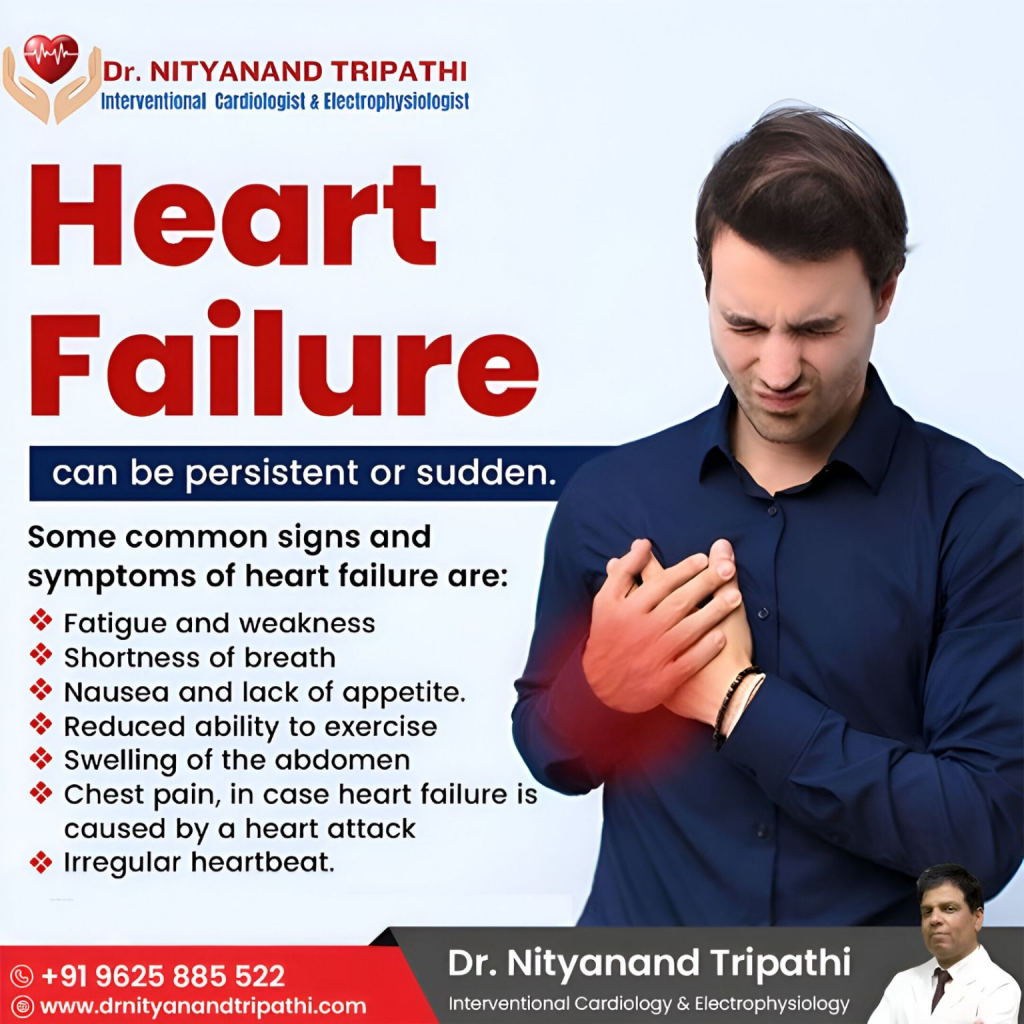
Signs and Symptoms of Heart Failure
Early recognition of symptoms is critical for effective management. Key symptoms of heart failure include:
- Shortness of breath during activity or while lying flat
- Swelling in legs, ankles, and feet (edema)
- Persistent fatigue and weakness
- Rapid or irregular heartbeat
- Chronic cough or wheezing, sometimes with white or pink mucus
- Sudden weight gain from fluid retention
If you notice any of these symptoms, it is important to consult a cardiologist promptly.
How Is Heart Failure Diagnosed?
Accurate diagnosis involves a combination of physical examination, medical history, and diagnostic tests, including:
- Electrocardiogram (ECG) – Detects electrical abnormalities in the heart.
- Echocardiogram – Shows the structure and pumping efficiency of the heart.
- Chest X-ray – Reveals heart enlargement or fluid in the lungs.
- Blood tests (BNP) – Measures levels of B-type natriuretic peptide, a marker of heart failure.
- Stress test – Evaluates how well the heart performs under exertion.
Treatment Options for Heart Failure
The goal of treatment is to improve heart function, relieve symptoms, and prevent complications. Treatment usually includes:
Lifestyle Modifications
- Following a heart-healthy, low-sodium diet
- Engaging in regular, doctor-approved physical activity
- Quitting smoking and limiting alcohol consumption
- Monitoring weight and symptoms daily
Medications
- Diuretics – Help reduce fluid buildup
- ACE inhibitors / ARBs – Improve blood flow and reduce heart workload
- Beta-blockers – Lower heart rate and blood pressure
Devices and Surgical Options
- Implantable Cardioverter-Defibrillator (ICD) – Prevents life-threatening arrhythmias
- Cardiac Resynchronization Therapy (CRT) – Restores coordinated heart contractions
- Heart transplant – For advanced cases unresponsive to standard treatments
Preventing Heart Failure
Preventive care plays a crucial role in reducing the risk of heart failure. Here’s how to protect your heart health:
- Keep blood pressure, diabetes, and cholesterol under control
- Eat a nutritious diet rich in fruits, vegetables, and whole grains
- Exercise regularly—aim for 30 minutes most days
- Avoid tobacco and excessive alcohol
- Visit your cardiologist for routine heart health evaluations
Living Well with Heart Failure
While heart failure is a chronic condition, with the right treatment and lifestyle, many patients live healthy, fulfilling lives. Here are a few tips:
- Take medications on time and as prescribed
- Limit salt intake to reduce fluid retention
- Monitor symptoms like breathlessness and weight gain
- Seek emotional and educational support from patient groups
Expert Opinion: Consult a Trusted Cardiologist
If you are experiencing symptoms of heart failure or have risk factors such as high blood pressure or diabetes, timely consultation with an experienced cardiologist is crucial.
Dr. Nityanand Tripathi is a senior interventional cardiologist with over 21 years of clinical experience in cardiology and cardiac electrophysiology. He completed his MBBS and MD (Medicine) from the Institute of Medical Sciences, Banaras Hindu University, and holds a DM in Cardiology from King George Medical University, Lucknow.
He specializes in diagnosing and treating complex heart conditions with advanced techniques, ensuring comprehensive care tailored to each patient’s needs.
Best Cardiologist in Shalimar Bagh
When searching for the Best Cardiologist in Shalimar Bagh, it is essential to choose a specialist with proven expertise, a patient-first approach, and access to modern diagnostic tools and treatment options. Timely diagnosis and personalized care make all the difference in heart failure outcomes.
Take control of your heart health this Heart Failure Awareness Week. Stay informed, act early, and schedule a consultation to ensure your heart beats stronger for years to come.