
AICD Implantation: Advanced Heart Rhythm Care | aicd implantation specialist in delhi
An Automatic Implantable Cardioverter Defibrillator (AICD) is an advanced medical device used to manage life-threatening heart rhythm disorders. It plays a critical role in preventing sudden cardiac arrest by continuously monitoring the heart’s electrical activity and correcting dangerous rhythms when they occur. As heart rhythm disorders are increasingly diagnosed, awareness about AICD implantation, its purpose, benefits, and risks has become essential.
Understanding AICD Implantation and the Role of an aicd implantation specialist in delhi
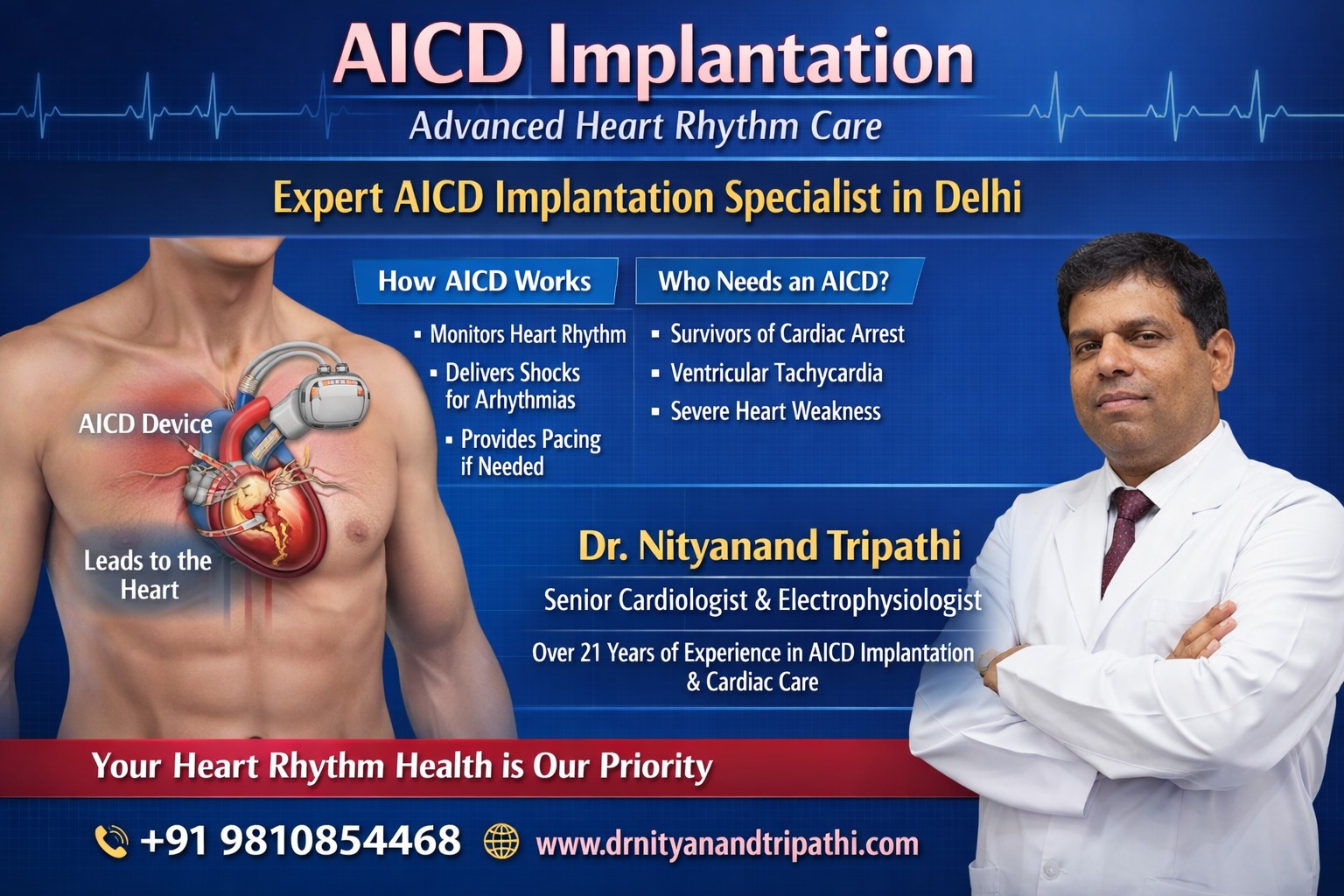
AICD implantation is a specialized cardiac procedure that requires expertise in electrophysiology and advanced cardiac care. The device is implanted under the skin, usually near the chest, and connected to the heart through thin wires called leads. Once implanted, the AICD constantly tracks heart rhythm and delivers electrical therapy when abnormal rhythms are detected.
What Is an AICD and How Does It Work?
An AICD is designed to protect individuals who are at high risk of dangerous arrhythmias.
Key Functions of an AICD
- Continuous monitoring of heart rhythm
- Delivery of pacing signals for slow or irregular rhythms
- Delivery of electrical shocks to stop life-threatening arrhythmias
The device functions automatically and does not require conscious input from the patient.
Why AICD Implantation Is Recommended
AICD implantation may be considered for individuals who:
- Have survived sudden cardiac arrest
- Have a history of ventricular tachycardia or fibrillation
- Have severely weakened heart muscles
- Are at high risk of sudden heart rhythm failure
The primary aim is prevention of sudden cardiac death rather than curing heart disease.
The AICD Implantation Procedure
The implantation process generally involves:
- Administering anesthesia
- Making a small incision near the collarbone
- Inserting leads into the heart through blood vessels
- Connecting the leads to the AICD device
- Placing the device under the skin
The procedure is minimally invasive but still requires careful planning and post-procedure monitoring.
Potential Risks and Harms of AICD Implantation
Although AICDs are life-saving for many, they are not without risks.
Short-Term Risks
- Infection at the implant site
- Bleeding or swelling
- Lung complications in rare cases
Device-Related Issues
- Inappropriate or painful shocks
- Lead displacement or malfunction
- Battery depletion requiring replacement surgery
Impact of AICD on Daily Life
Living with an AICD may involve certain lifestyle adjustments:
- Temporary restriction on arm movement after implantation
- Avoidance of strong magnetic fields
- Regular follow-up visits for device checks
Some individuals may also experience emotional stress related to fear of shocks or device malfunction.
Psychological and Emotional Effects
The presence of an implanted device can lead to:
- Anxiety about sudden shocks
- Reduced confidence in physical activity
- Stress related to long-term dependency on the device
Emotional adaptation is an important part of long-term AICD management.
Long-Term Care and Monitoring
AICD implantation requires ongoing care, including:
- Regular device evaluations
- Monitoring battery life and lead function
- Planning for future battery replacement
Proper long-term follow-up helps reduce complications and ensures device reliability.
When AICD Implantation May Not Be Suitable
AICD implantation may not be appropriate if:
- The risk of dangerous arrhythmias is low
- Life expectancy is limited due to other serious conditions
- The device may negatively impact quality of life
Careful evaluation is essential before implantation.
Conclusion
AICD implantation is a significant advancement in the prevention of sudden cardiac death for high-risk individuals. While the device offers powerful protection against life-threatening arrhythmias, it also comes with surgical, physical, and emotional considerations. Understanding how an AICD works, its potential risks, and its long-term impact helps individuals make informed decisions and prepare for life with an implanted cardiac device.
Expert AICD Implantation Care in Delhi
Dr. Nityanand Tripathi is a highly experienced AICD implantation specialist in Delhi with over 21 years of expertise in clinical and interventional cardiology and electrophysiology. He completed his MBBS & MD from IMS, BHU Varanasi and DM (Cardiology) from KGMU Lucknow.
He specializes in AICD/ICD, CRT devices, advanced pacemakers, complex angioplasties, radiofrequency ablation, leadless pacemakers (Micra), and TAVR, using the latest technologies for safe and precise heart rhythm care.