

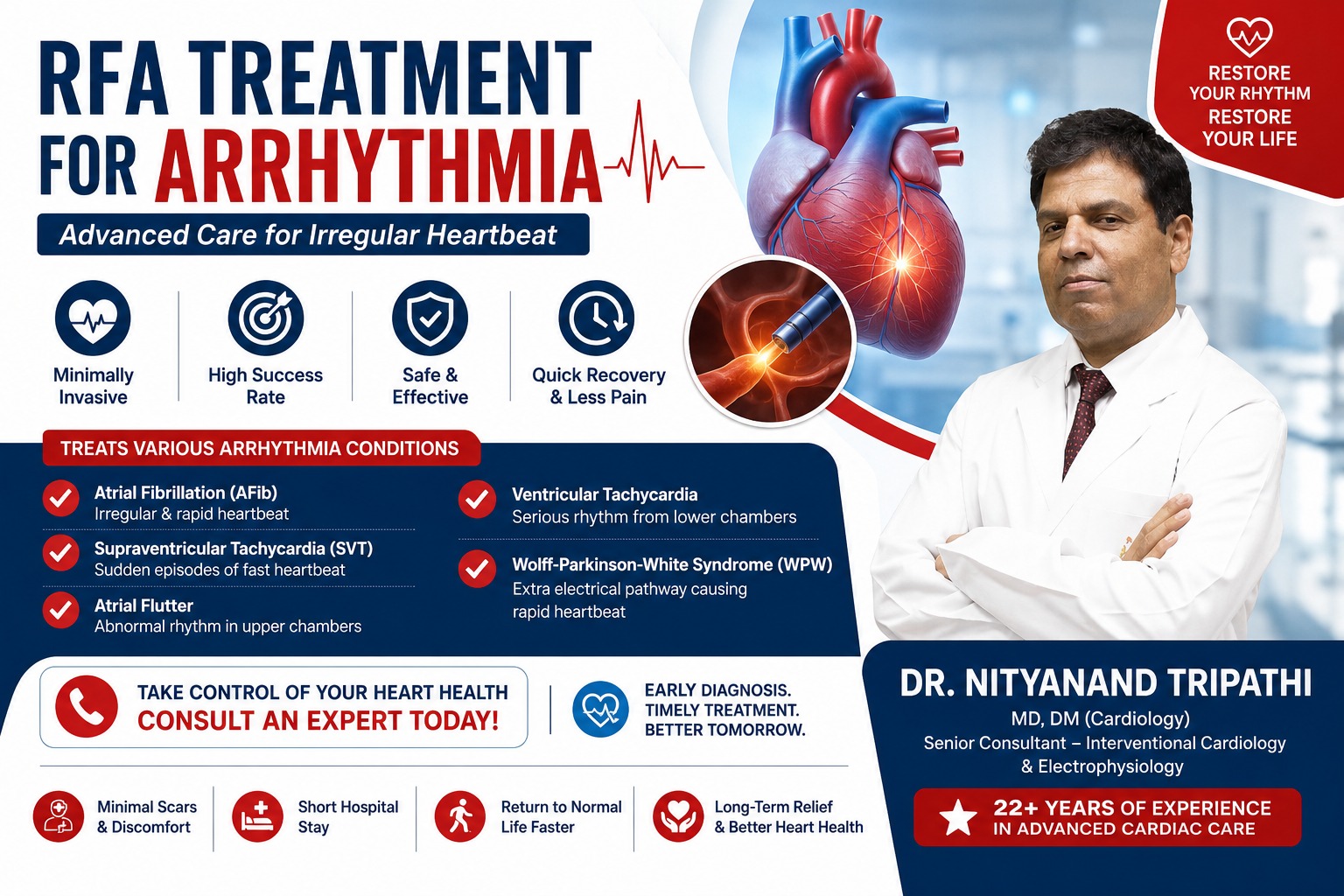
RFA Treatment for Arrhythmia in Shalimar Bagh Delhi – Advanced Care for Irregular Heartbeat
Heart rhythm disorders are becoming increasingly common due to stress, unhealthy lifestyle habits, high blood pressure, diabetes, and other cardiac conditions. Many people experience symptoms such as rapid heartbeat, skipped beats, chest discomfort, dizziness, and shortness of breath without realizing they may be suffering from arrhythmia.
Today, with modern cardiac technology, RFA Treatment for Arrhythmia has emerged as one of the most effective and trusted treatment options for restoring a healthy heart rhythm. This advanced minimally invasive procedure helps patients live a safer, healthier, and more active life without constant fear of sudden heart rhythm disturbances.
Patients from across Delhi now prefer RFA Treatment for Arrhythmia because of its high success rate, quick recovery, reduced dependence on medications, and long-term relief from abnormal heart rhythms.
What is RFA Treatment for Arrhythmia in Shalimar Bagh Delhi?
RFA (Radiofrequency Ablation) is a specialized cardiac procedure used to treat irregular heart rhythms caused by abnormal electrical signals inside the heart.
In RFA Treatment for Arrhythmia a highly trained cardiac electrophysiologist inserts thin flexible tubes called catheters through blood vessels, usually from the groin area, and carefully guides them toward the heart. Once the problematic electrical pathway is identified, controlled radiofrequency energy is used to destroy the tiny tissue responsible for the irregular heartbeat.
This procedure helps restore a normal heart rhythm and prevents future episodes of arrhythmia.
Why Patients Prefer RFA Treatment for Arrhythmia
There are several reasons why patients increasingly choose RFA Treatment for Arrhythmia over long-term medication-based management.
Minimally Invasive Procedure
Unlike open-heart surgery, RFA is performed using small catheter insertions without large cuts or stitches. This means:
- Less pain and discomfort
- Minimal bleeding
- Faster healing
- Smaller scars
- Reduced hospital stay
Many patients feel comfortable returning to their normal routine within a few days.
High Success Rate of RFA Treatment for Arrhythmia
One of the biggest advantages of RFA Treatment for Arrhythmia is its impressive success rate.
For many types of arrhythmias, the procedure offers long-term or even permanent relief from symptoms. Patients often notice major improvements in their daily life after successful treatment.
Benefits include:
- Stable heartbeat
- Reduced palpitations
- Improved exercise capacity
- Better sleep quality
- Increased confidence in daily activities
Reduced Dependency on Heart Medications
Many arrhythmia patients need long-term medicines to control symptoms. However, medications may not always provide complete relief and can sometimes cause side effects.
After successful RFA Treatment for Arrhythmia, patients may be able to reduce or discontinue certain medications under medical supervision.
This is one of the major reasons people prefer this advanced treatment option.
Conditions Treated with RFA Treatment for Arrhythmia in Shalimar Bagh Delhi
RFA treatment is commonly recommended for several types of abnormal heart rhythms, including:
Atrial Fibrillation (AFib)
A common condition where the heart beats irregularly and rapidly, increasing the risk of stroke.
Supraventricular Tachycardia (SVT)
A condition causing episodes of extremely fast heartbeat that may suddenly start and stop.
Atrial Flutter
An abnormal rhythm originating in the upper chambers of the heart.
Ventricular Tachycardia
A serious rhythm disorder arising from the lower chambers of the heart that may become life-threatening.
Wolff-Parkinson-White Syndrome (WPW)
A condition involving an extra electrical pathway in the heart that can trigger rapid heartbeat episodes.
Symptoms That May Require RFA Treatment for Arrhythmia
You should consult a cardiac specialist if you experience symptoms such as:
- Rapid heartbeat
- Fluttering sensation in the chest
- Irregular pulse
- Chest pain
- Dizziness
- Fainting episodes
- Breathlessness
- Extreme fatigue
- Anxiety associated with palpitations
Ignoring these symptoms may increase the risk of serious heart complications over time.
How is RFA Treatment for Arrhythmia Performed?
The procedure is carefully planned using advanced cardiac mapping systems.
Step-by-Step Process
- The patient is given local anesthesia and mild sedation.
- Thin catheters are inserted through blood vessels.
- The catheters are guided to the heart.
- The doctor identifies abnormal electrical signals.
- Radiofrequency energy is delivered to the problematic area.
- The abnormal tissue is destroyed to restore normal rhythm.
The procedure generally takes between 2 to 4 hours depending on the complexity of the condition.
Benefits of RFA Treatment for Arrhythmia
Major Advantages Include:
- Minimally invasive procedure
- High precision treatment
- Quick recovery time
- Reduced hospital stay
- Less pain compared to surgery
- Long-term symptom relief
- Improved quality of life
- Better heart rhythm control
- Lower risk of sudden complications
- Reduced dependency on lifelong medicines
Recovery After RFA Treatment for Arrhythmia
Recovery is usually smooth and relatively quick.
Most patients:
- Start walking within a few hours
- Go home within 24–48 hours
- Resume normal activities within a few days
- Experience gradual improvement in symptoms
Doctors may recommend avoiding heavy lifting and strenuous activity for a short period after the procedure.
Is RFA Treatment for Arrhythmia ?
Yes, RFA Treatment for Arrhythmia is considered a safe and highly effective procedure when performed by an experienced cardiac electrophysiologist using modern technology.
Advanced imaging and mapping systems have significantly improved the safety and accuracy of the treatment. Serious complications are relatively uncommon, and most patients recover successfully.
Who is the Ideal Candidate for RFA Treatment for Arrhythmia?
You may be a suitable candidate if:
- You experience frequent arrhythmia episodes
- Medications are not effective
- You develop side effects from medicines
- Your arrhythmia affects daily life
- You want a long-term treatment solution
- You are at risk of serious cardiac complications
A detailed cardiac evaluation helps determine the best treatment approach.
Why Early Treatment is Important
Many people ignore heart rhythm problems until symptoms become severe. However, untreated arrhythmia can sometimes increase the risk of:
- Stroke
- Heart failure
- Sudden cardiac arrest
- Poor blood circulation
- Reduced quality of life
Early diagnosis and timely RFA Treatment for Arrhythmia can help prevent these complications and improve long-term heart health.
Conclusion
Modern cardiac care has significantly improved the treatment of heart rhythm disorders, and RFA Treatment for Arrhythmia in Shalimar Bagh, Delhi is now considered one of the safest and most effective solutions for managing abnormal heart rhythms. With its minimally invasive approach, high success rate, faster recovery, and long-term symptom relief, RFA treatment helps patients return to a healthier and more active lifestyle.
Dr. Nityanand Tripathi, a highly experienced cardiologist with over 22 years of expertise in clinical and interventional cardiology and electrophysiology, provides advanced and patient-focused arrhythmia care. Choosing an experienced specialist for RFA Treatment for Arrhythmia in Shalimar Bagh, Delhi can make a significant difference in treatment success, safety, and long-term heart health.
Frequently Asked Questions (FAQs)
What is RFA Treatment for Arrhythmia?
It is a minimally invasive cardiac procedure that uses radiofrequency energy to treat abnormal electrical pathways in the heart causing irregular heartbeat.
Is RFA Treatment painful?
The procedure is generally not painful because local anesthesia and sedation are used during treatment.
How long does recovery take after RFA Treatment for Arrhythmia ?
Most patients recover quickly and resume daily activities within a few days.
What is the success rate of RFA Treatment for Arrhythmia ?
The success rate is generally high, especially for common arrhythmias such as SVT and atrial flutter.
Can arrhythmia come back after RFA treatment?
In some cases, arrhythmia may recur, but many patients experience long-term symptom relief after treatment.
Is hospitalization required for RFA Treatment for Arrhythmia ?
Yes, but the hospital stay is usually short, and many patients are discharged within 24–48 hours.
Who should consider RFA Treatment for Arrhythmia?
Patients with frequent irregular heartbeat episodes, medication side effects, or persistent symptoms despite medicines may benefit from this procedure.